Mastering the R&D Tax Incentive: top mistakes to avoid with your application

Bruce Murray · Manager, R&D and Government Incentives · 10 March 2025

Last reviewed: October 27, 2026
Navigating the Research and Development (R&D) Tax Incentive doesn’t have to be a headache if you know what pitfalls to avoid. We spoke with Bruce Murray, R&D Consultant at FundFindrs, who shares a list of the most common R&DTI application mistakes and, more importantly, how to prevent them.
The R&DTI is an invaluable funding opportunity, supporting business innovation and growth. Yet many companies struggle with eligibility criteria, fail to maintain proper records, or underestimate the importance of early submission — all of which can lead to application delays or rejections.
With extensive experience in R&D compliance and successful claims, Bruce gives us a rundown of common application mistakes and highlights what businesses can do to increase their chances of a smooth, stress-free successful application.
What are some common mistakes companies make when preparing their R&D Tax Incentive application?
What might first-time R&DTI applicants overlook when determining eligible projects?
How does the submission deadline for the R&DTI impact businesses?
Key takeaways
Poor record-keeping can make it difficult to substantiate an R&D Tax Incentive claim, making accurate and contemporaneous documentation essential.
Not all innovative work qualifies for the R&D Tax Incentive. Activities must satisfy the program's legislative requirements and eligibility criteria.
Strong claims are supported by evidence, including documented methodologies, experiments, outcomes and quantifiable data.
Claims may be deemed ineligible when supporting evidence is insufficient to demonstrate eligible R&D activities.
Correctly identifying eligible projects is critical, particularly for first-time applicants navigating the program requirements.
Early preparation provides more time to gather evidence, address documentation gaps and strengthen a claim.
1. What are some common mistakes companies make when preparing their R&D Tax Incentive application?
One of the most common mistakes companies make is failing to keep adequate records of their R&D activities. Many businesses do not document their R&D activities thoroughly, leading to gaps in the evidence required to document and substantiate their claims.
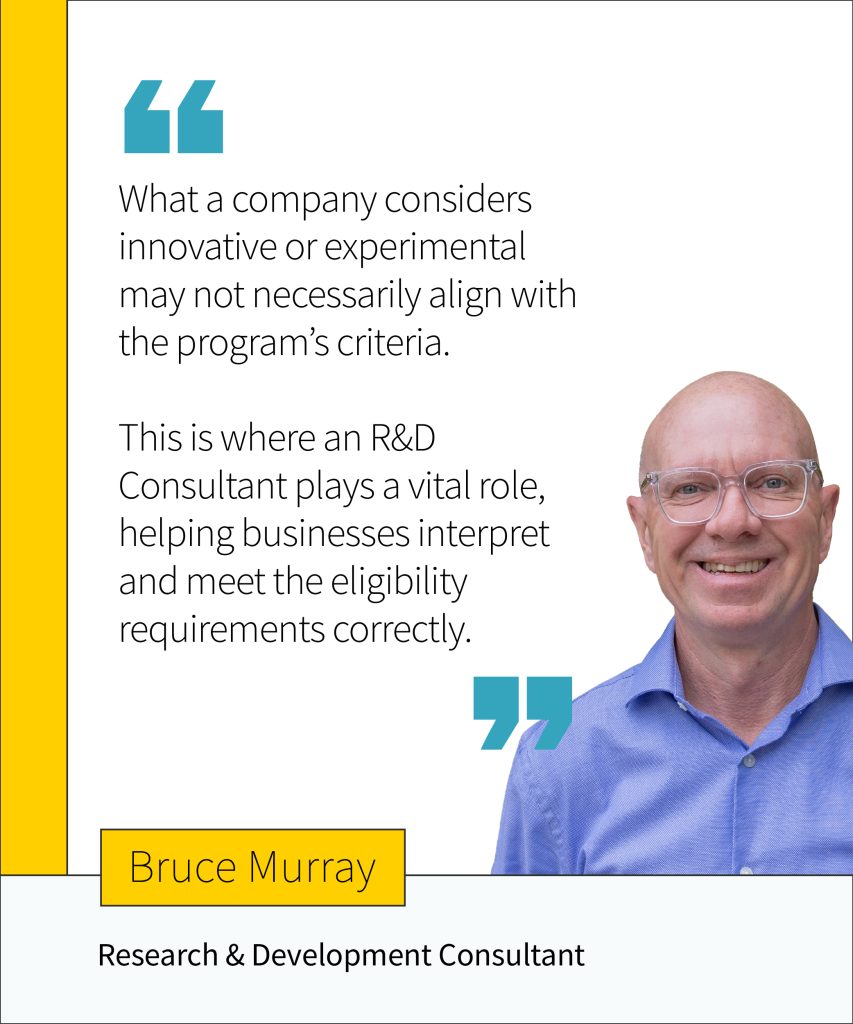
Another key issue is the misunderstanding of what constitutes eligible R&D under AusIndustry’s definition. What a company considers innovative or experimental may not necessarily align with the program’s criteria. This is where an R&D Consultant plays a vital role, helping businesses interpret and meet the eligibility requirements correctly.
Companies also sometimes lack scientific metrics to support their claims. Without proper quantifiable data documentation of methodologies, experiments and outcomes, an application may fall short of addressing the necessary criteria.
2. Why are some R&D Tax Incentive applications rejected?
The primary reason applications are rejected is a lack of evidence demonstrating eligible R&D activities. Each application is assessed on its own merits. If it fails to meet legislative criteria, it will not be approved.
To ensure success, companies must provide clear experimental evidence, including quantifiable data and methodologies. This involves tracking changes and improvements throughout the R&D process, showing what the data indicated before the project began and how it evolved because of the R&D efforts.
Ultimately, applications need to demonstrate a structured, scientific methodology to problem solving and innovation. Without this, even genuinely innovative work may not qualify for the incentive.
3. What might first-time R&DTI applicants overlook when determining eligible projects?
It is important that any business considering applying for the R&DTI understands the definition of eligible R&D activities. This definition comes from the legislation, rather than being based on what a company may consider R&D activities.
Once a company understands the definition of eligible R&D activities, it is important to isolate those R&D activities from general project activities. This is something businesses may overlook and therefore subsequently find challenging. Part of what we do is assist our clients with the clarification and direction to ensure eligible activities are not missed.
4. What are the most common mistakes companies make in documenting their R&D activities? What specific aspects do they frequently neglect?
We have found that some companies have done the experimental research required, and it would meet the criteria of what is eligible. However, they are let down by record keeping. It is very important to keep track of research evidence in each aspect of the research.
An example of this would be engaging an external consultant. Where an external person is engaged to deliver an outcome requiring research, the company engaging the consultant should include the experimental and research evidence in the plans and working documents of the project. These records should be maintained to demonstrate the research involved, not simply the engagement of another party to carry out the work.
Without this record of work, and detailed account of the activities, an application will likely be rejected.
5. How does the submission deadline for the R&DTI impact businesses?
We can all identify with the pressure an approaching deadline brings, and we always recommend applying for the R&D Tax Incentive sooner rather than later. One common mistake businesses make is underestimating the time required to prepare a strong application, often assuming they have plenty of time within the 10-month window provided by AusIndustry — from 1 July following FYE to the final submission deadline of 30 April. However, many companies face competing priorities, such as business development, compliance, finance, and marketing, which can lead to last-minute submissions.
Delaying an R&DTI application can result in several negative consequences, including a delayed rebate due to longer processing times, increased administrative workload when processing tax adjustments after lodging the Company Tax Return (CTR), and reduced cash flow, which can impact overall business operations. To avoid these pitfalls, businesses should aim to submit their applications as early as possible following the end of the financial year.
FundFindrs is here to help. Get in touch if you want to chat about how our team can collaborate with your business and guide your R&DTI application. Additionally, we can support identifying other funding opportunities through grants. Book a FREE chat with one of our specialist consultants now.
About the author
Bruce Murray
Manager, R&D and Government Incentives
With decades of experience in audit and risk, assessing and approving R&DTI applications with AusIndustry, guiding and supporting businesses through the entire application process, Bruce Murray has supported over 100 FundFindrs clients across manufacturing, pharmaceutical, technology, and other industries, bringing practical insight into a wide range of innovation scenarios. Together with the FundFindrs team, he has also achieved a 100% success rate on eligible R&DTI applications, reflecting a consistent, high-quality approach to assessment and submission.
Frequently asked questions
What are the most common R&D Tax Incentive claim mistakes?
Why can an R&D Tax Incentive claim be rejected?
What records should businesses keep for an R&D Tax Incentive claim?
How can businesses identify eligible R&D activities?
When should businesses start preparing an R&D Tax Incentive claim?
Related articles

Mastering the R&D Tax Incentive: expert tips for eligibility, air-tight applications and claim success
Bruce Murray, FundFindrs R&D Consultant, shares key insights on qualifying, capturing eligible costs, and ensuring your business is ready to successfully claim the R&DTI.

Eligible R&D Activities: What It Means for the R&D Tax Incentive in Australia
The R&D Tax Incentive (R&DTI) is one of Australia’s most valuable programs for innovative businesses, but many companies still struggle with one core question: “What actually counts as eligible R&D activities?” Understanding what the legislation means by eligible R&D activities, and how to distinguish core from supporting activities, is essential for maximising your claim and reducing compliance risk. This guide breaks it down in clear, practical terms to help you assess eligibility with confidence.